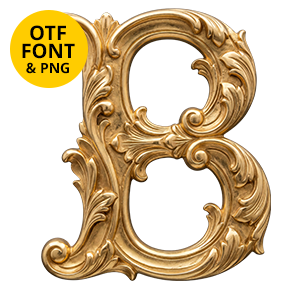
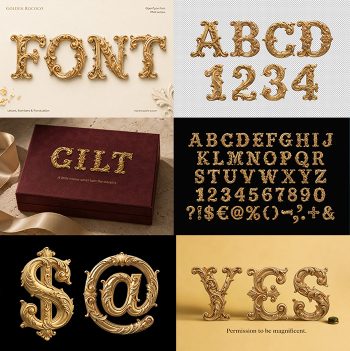
White marble, carved back until the letters wear acanthus leaves. Stems curl off the stroke, petals catch the light, and the serif underneath holds its shape through all of it. This is the ornate end of stonework, the kind you find over a museum door or on a perfume box that costs more than the perfume.
White Stone, Carved Into Leaves
A stonemason would recognise this work immediately. Each capital is a high-contrast serif buried under acanthus scrollwork, though the leaves still curl off the stems and spill past the letter edge. The marble is white and slightly warm, veined here and there, so the carving catches light along every ridge. Since the relief stays shallow, the letterform survives underneath all that ornament. A word still reads as a word, then, rather than as wallpaper.
The Marble Bas-relief Font Up Close
Look closely and the Marble Bas-relief Font gives up its tricks. Petals sit at different depths, some stems undercut the surface, and a few leaves break the baseline entirely. Ampersand and exclamation mark got the same treatment, which is rarer than it sounds. Because every glyph was carved on its own, repeated letters in one word never mirror each other. Above all, the shadows stay soft, so nothing turns into grey mush at small sizes.