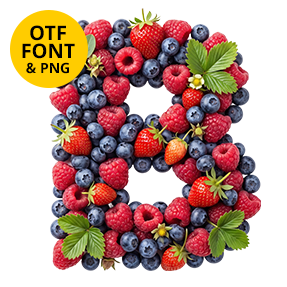
Nature Fonts Built from the Outdoors
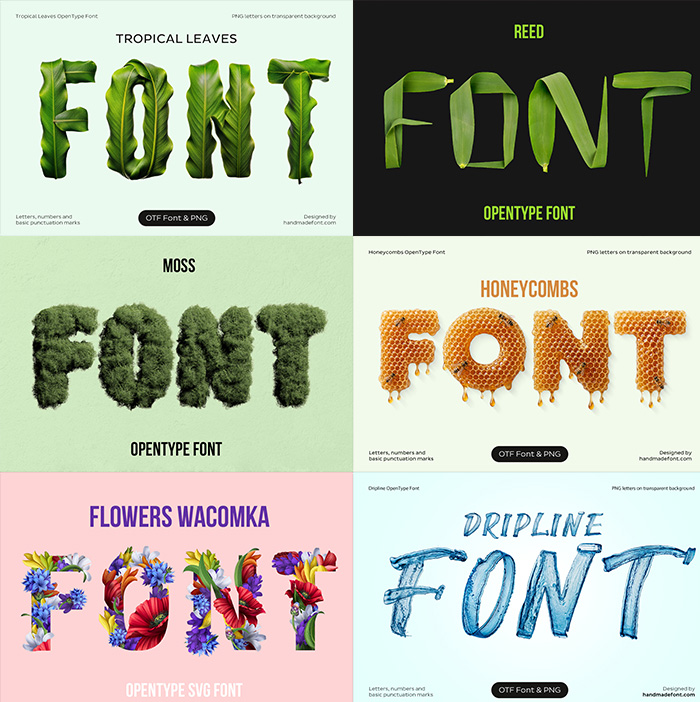
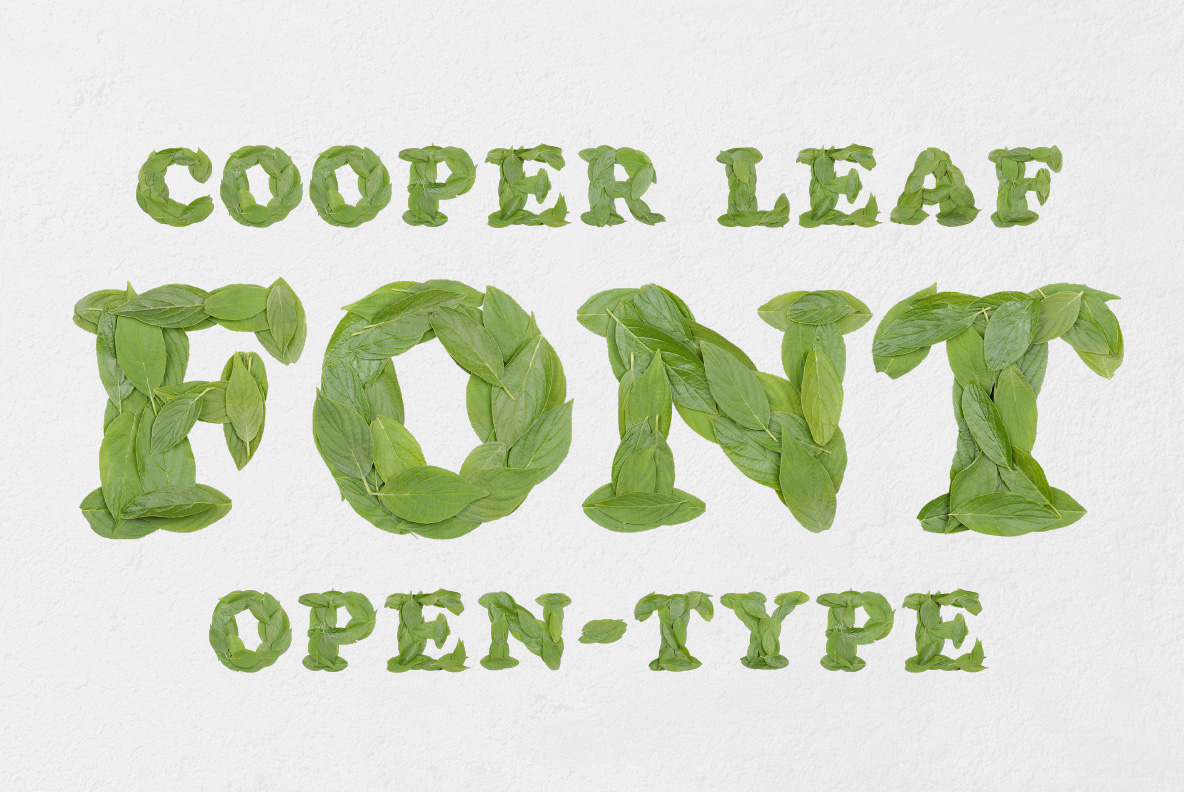
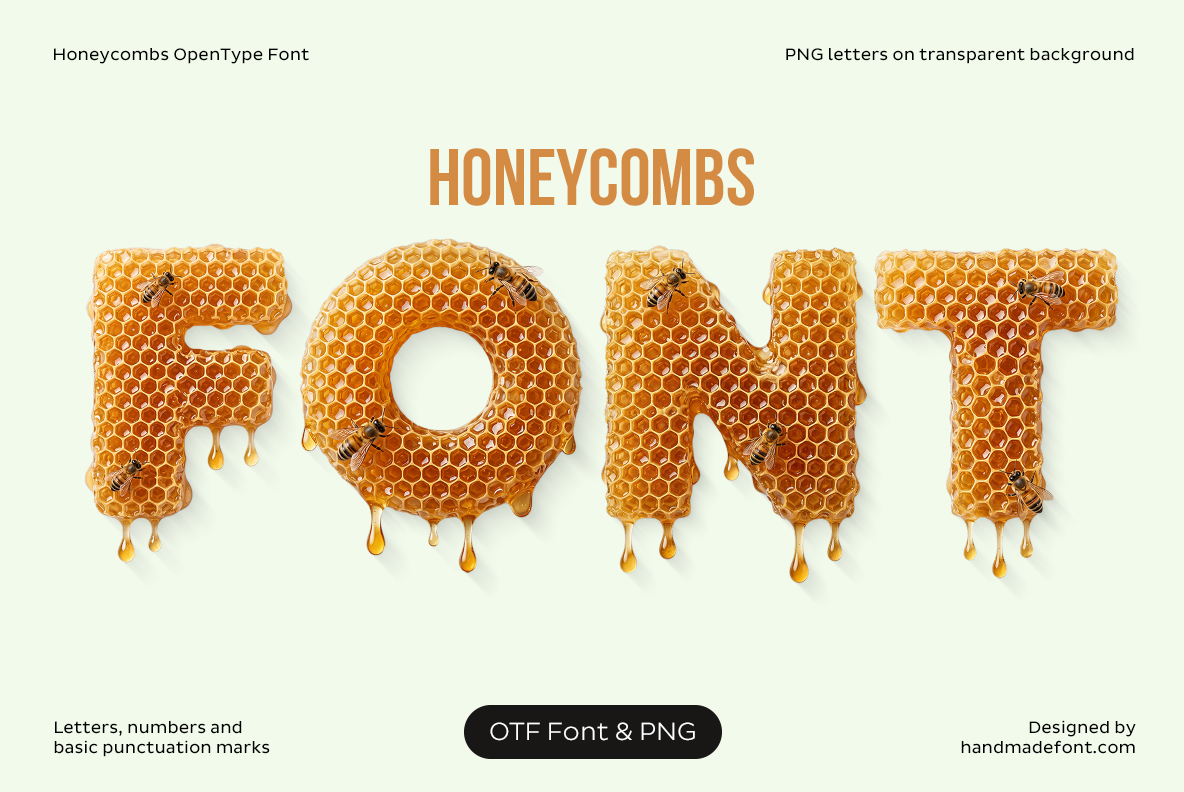
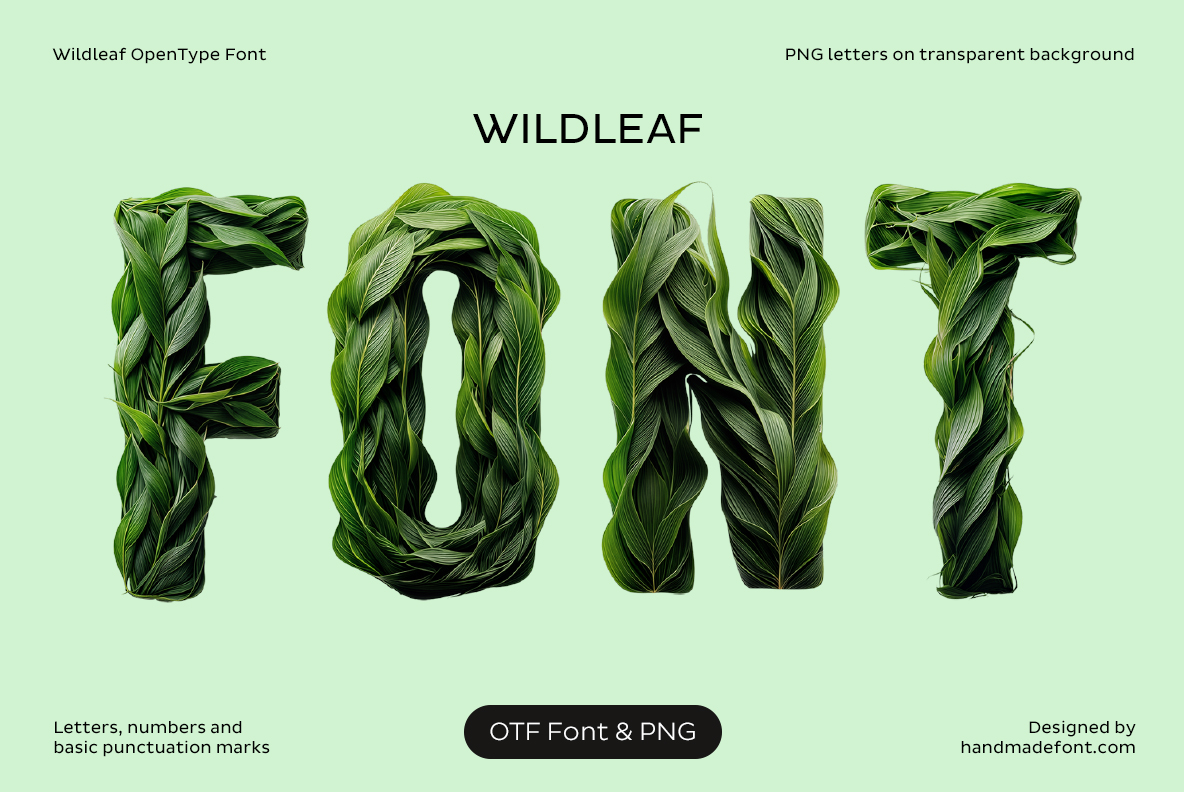
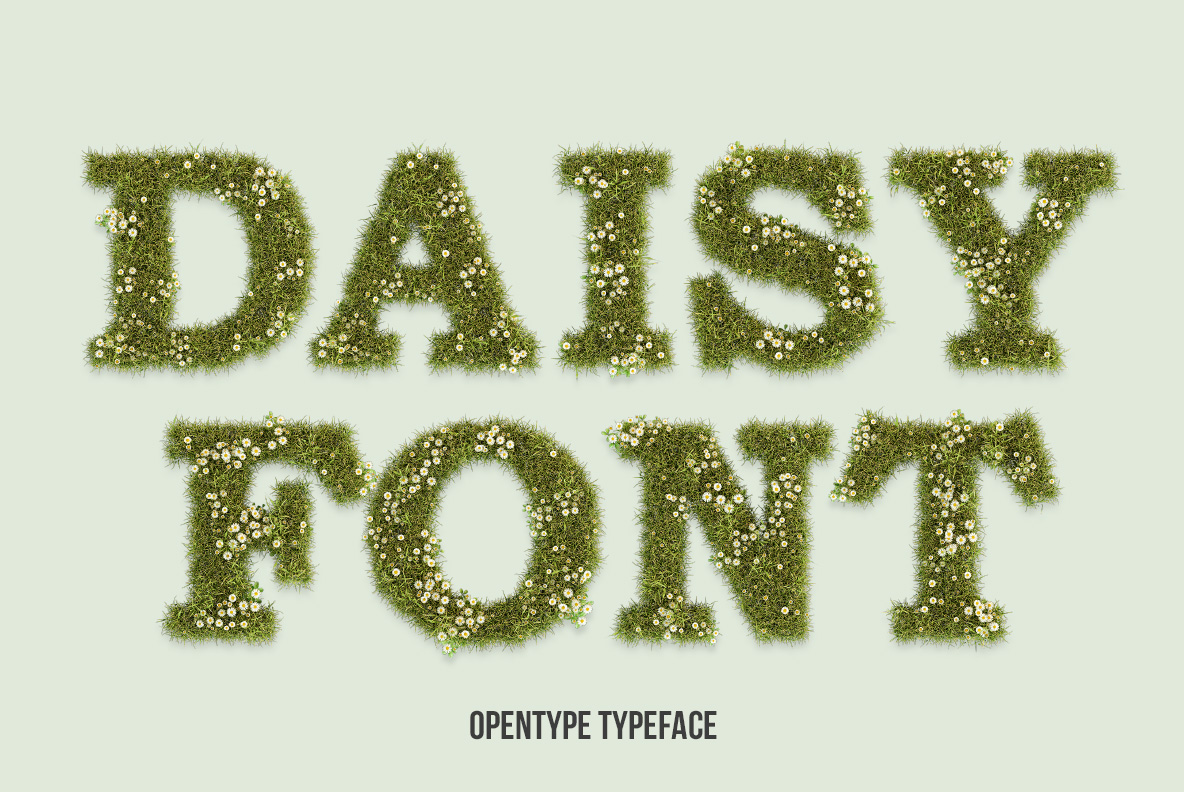
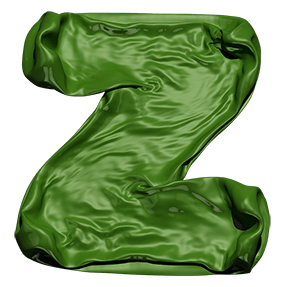
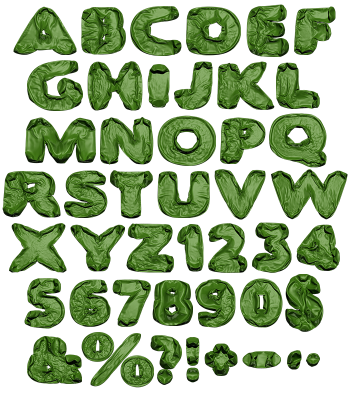
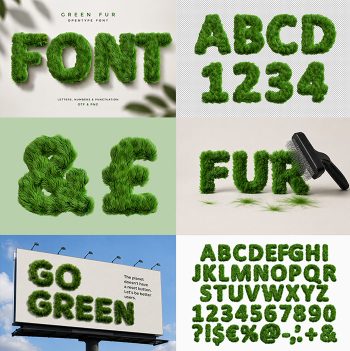
Nature Fonts turn the textures, structures and materials of the natural world into expressive letterforms. Instead of simply adding a green color or botanical pattern to conventional typography, these designs use recognizable elements such as leaves, moss, grass, flowers, wood, stone and water as part of the characters themselves. Some alphabets feel carefully constructed, while others look as though they have simply grown into shape. The result is typography with a physical connection to the outdoors.
From Forest Floors to Tropical Leaves
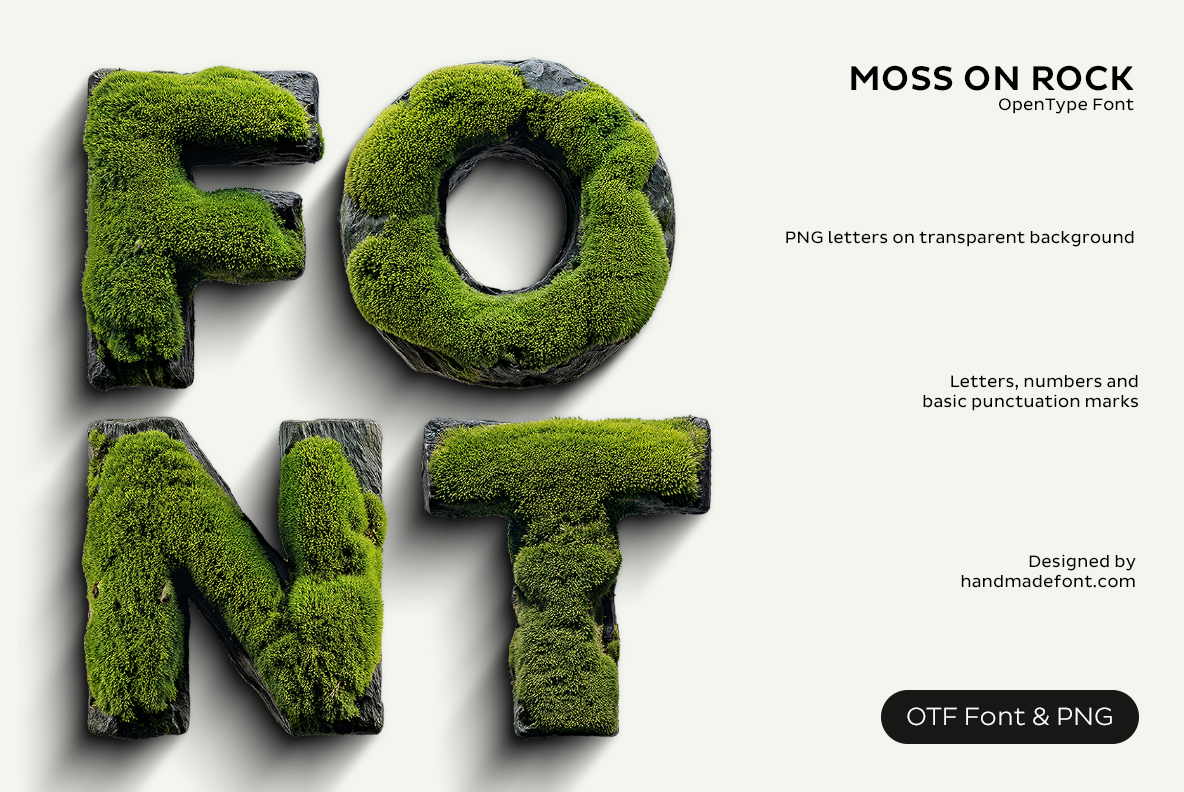
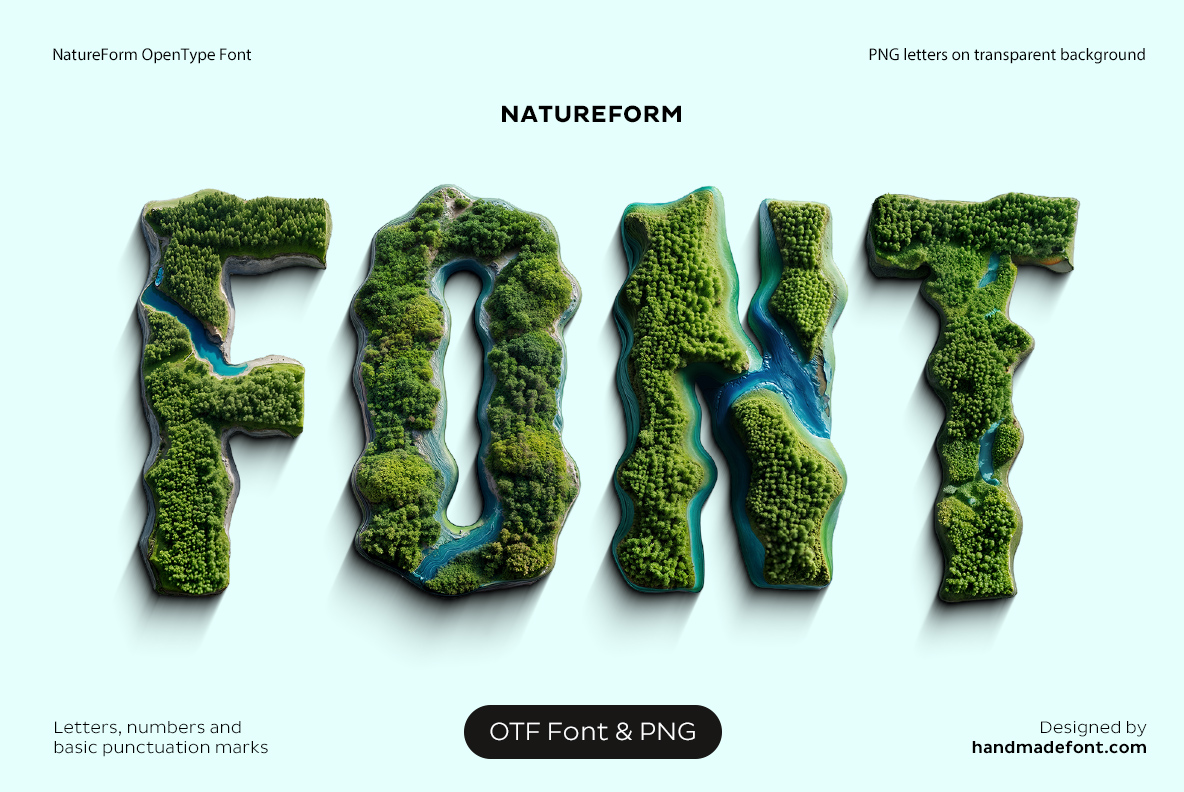
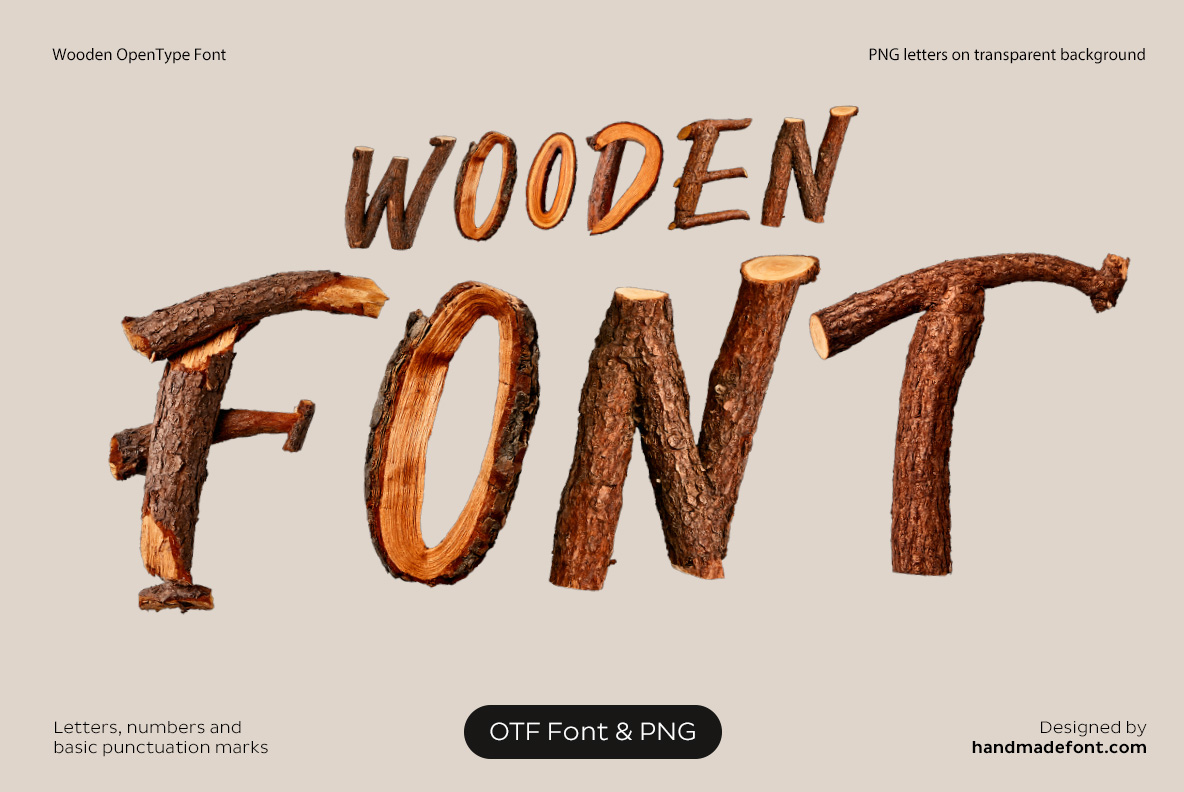
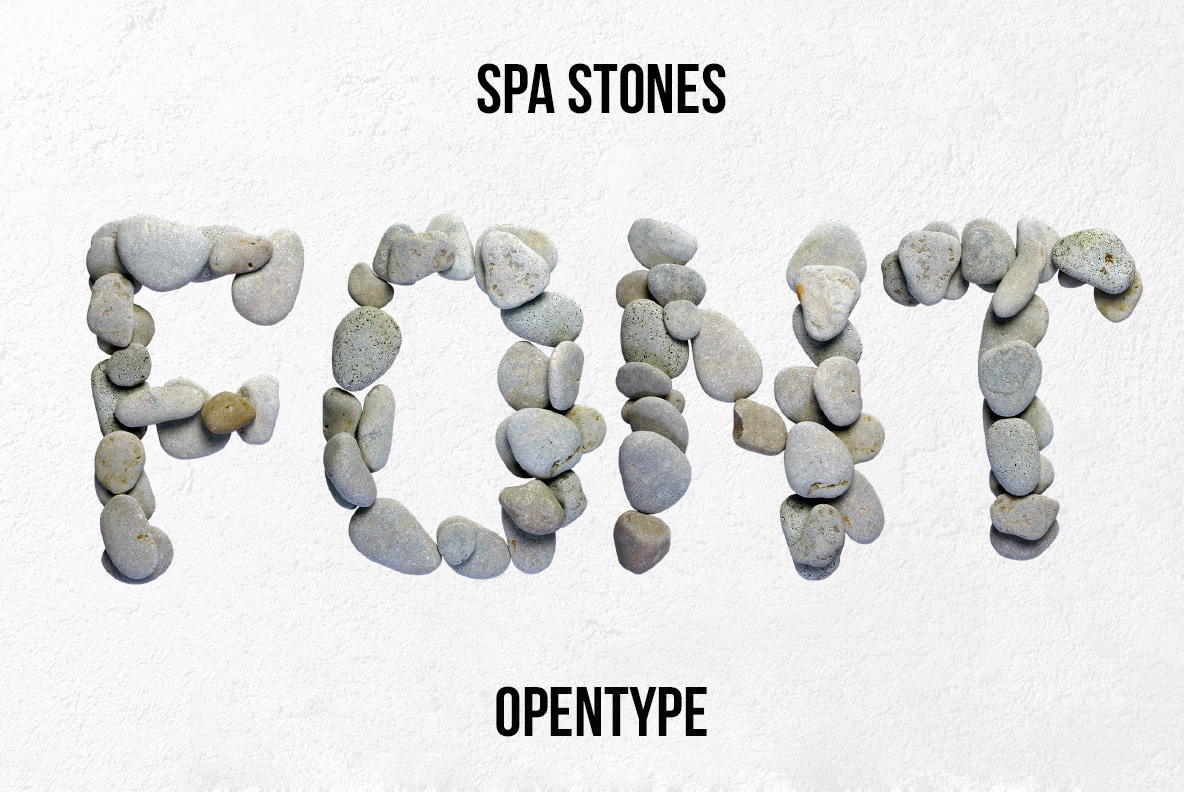
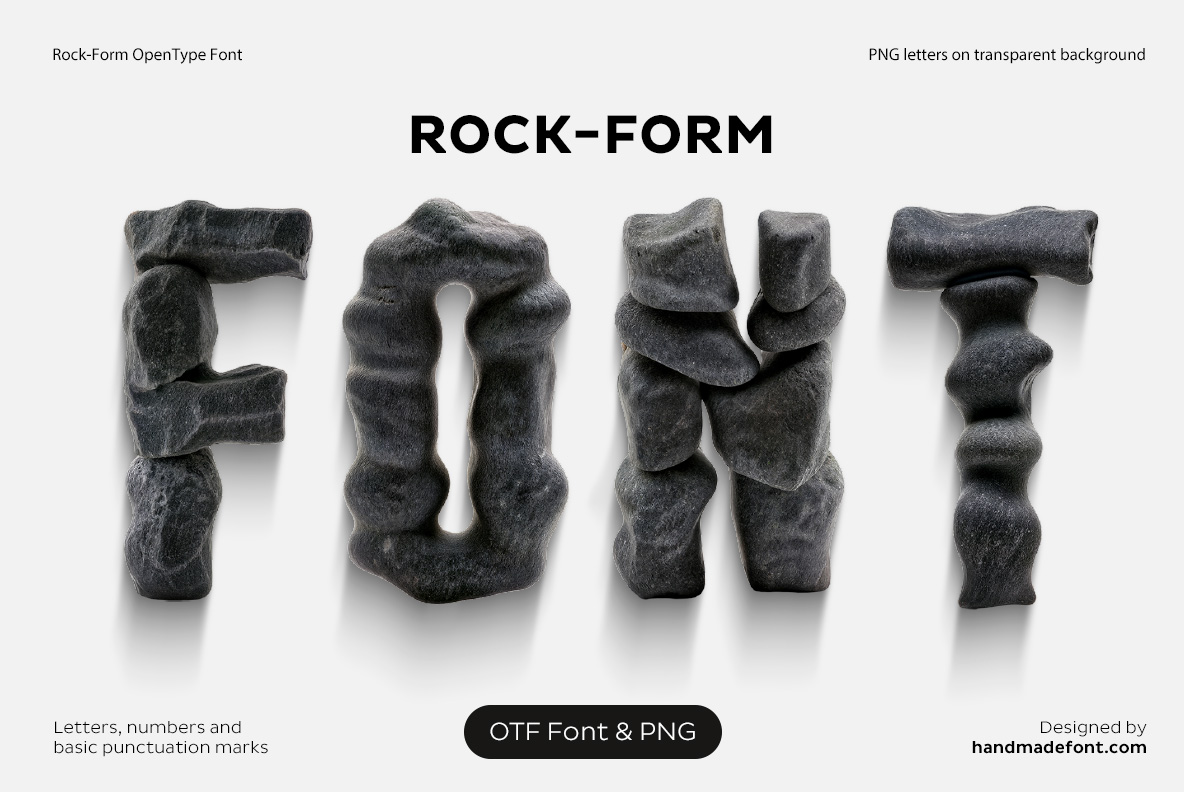
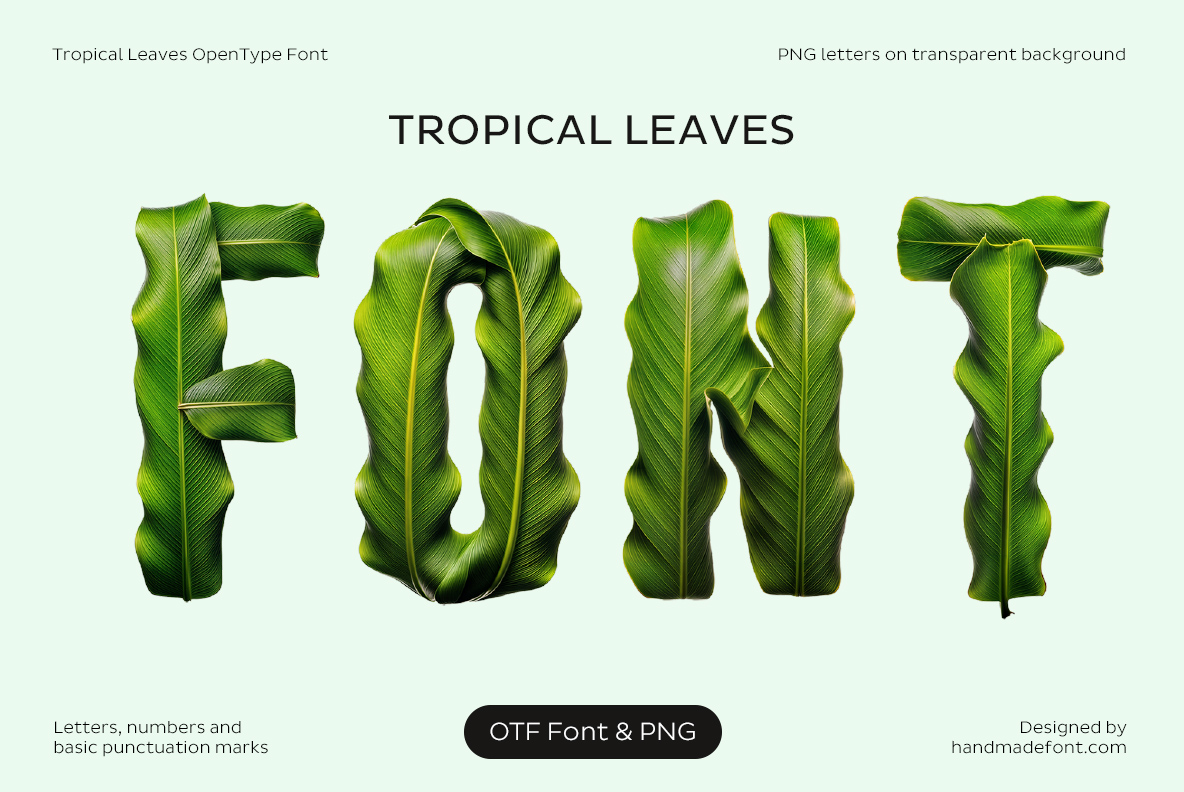
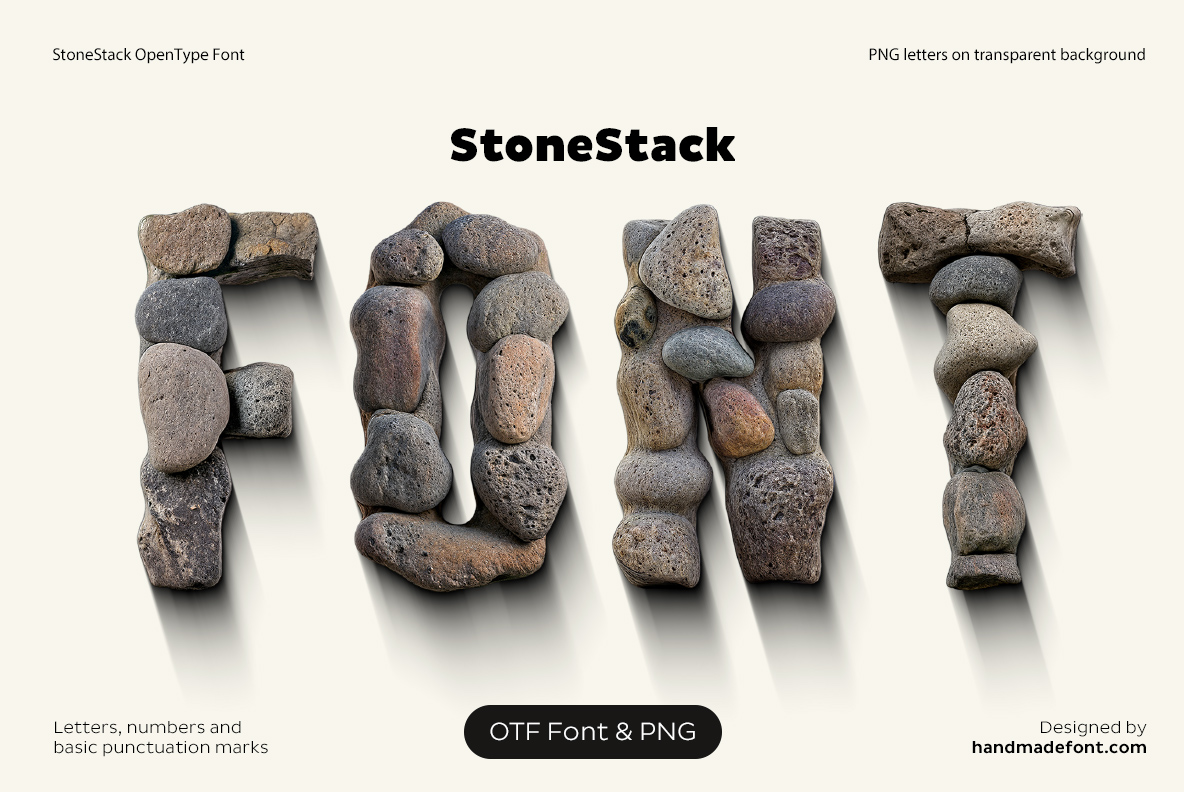
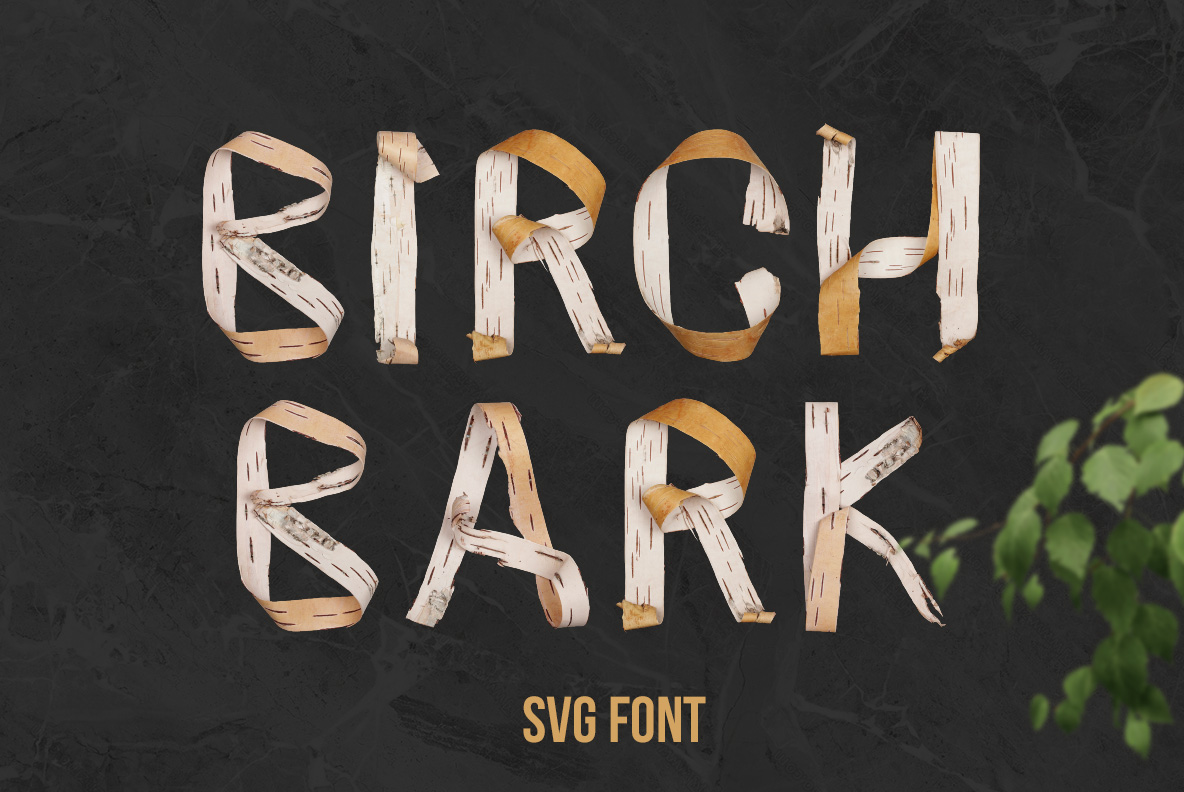
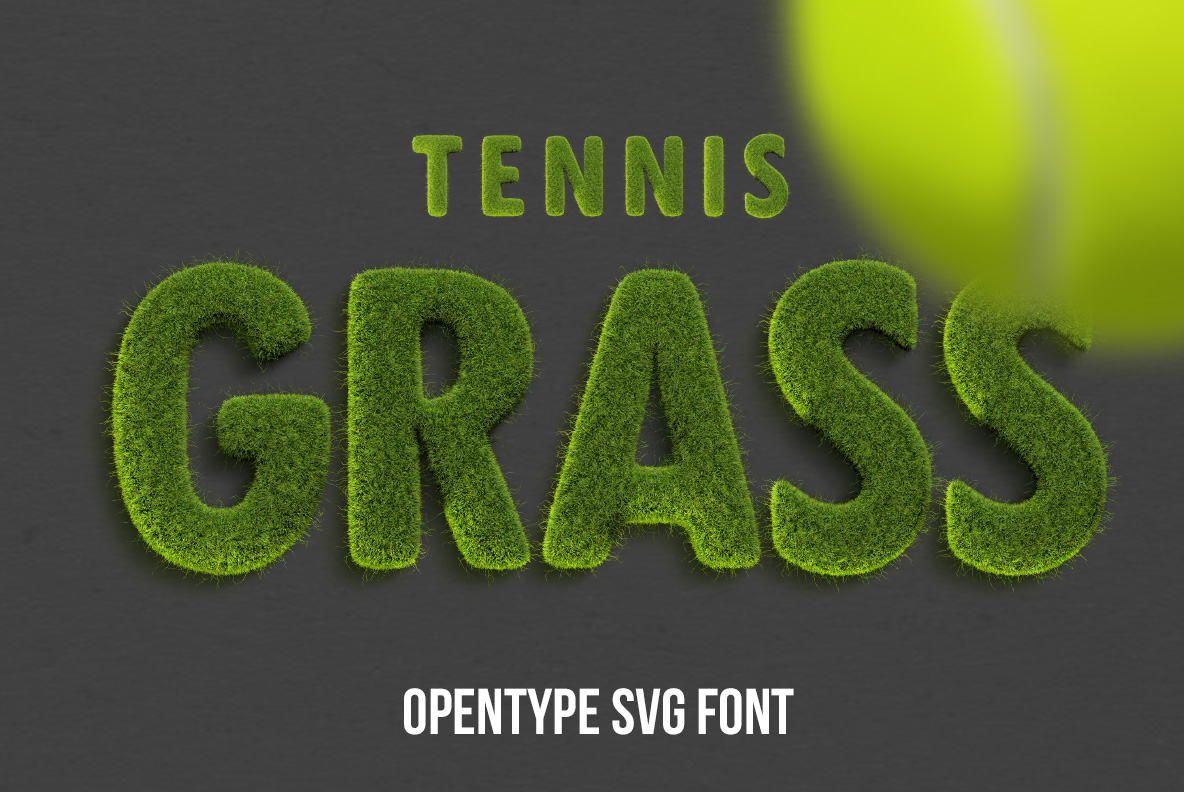
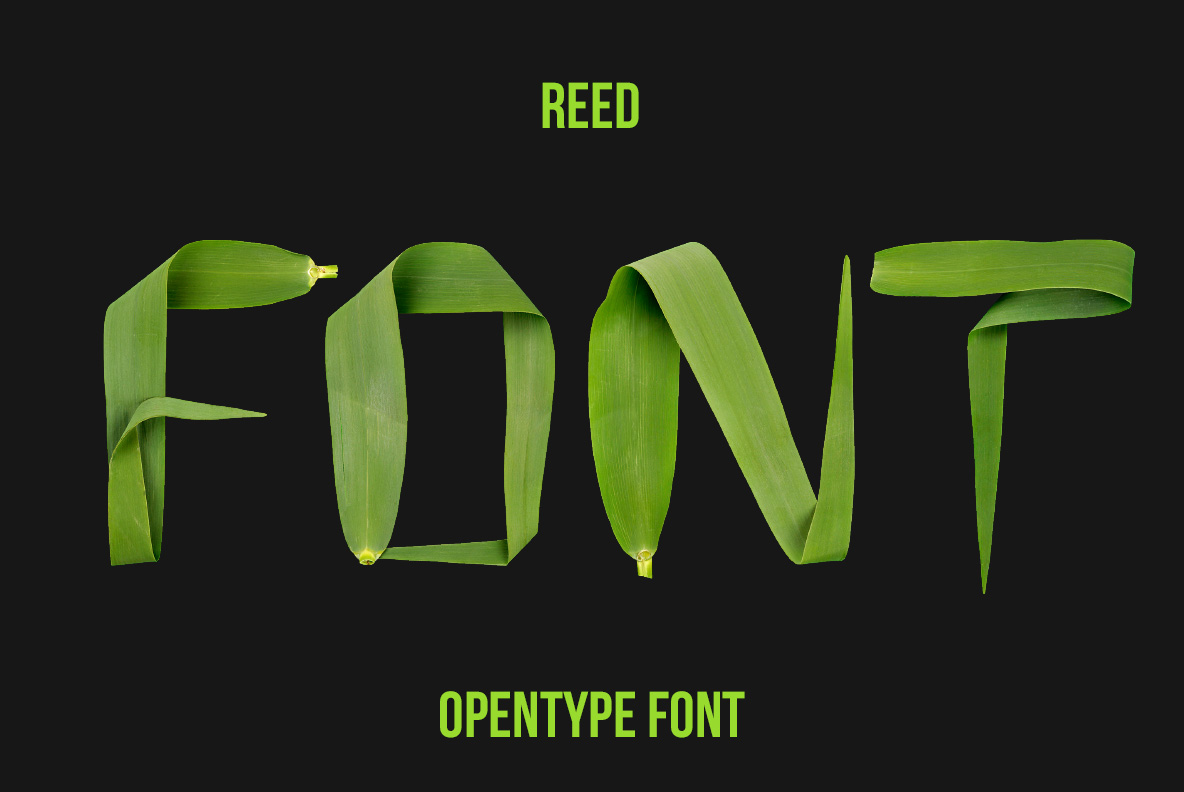
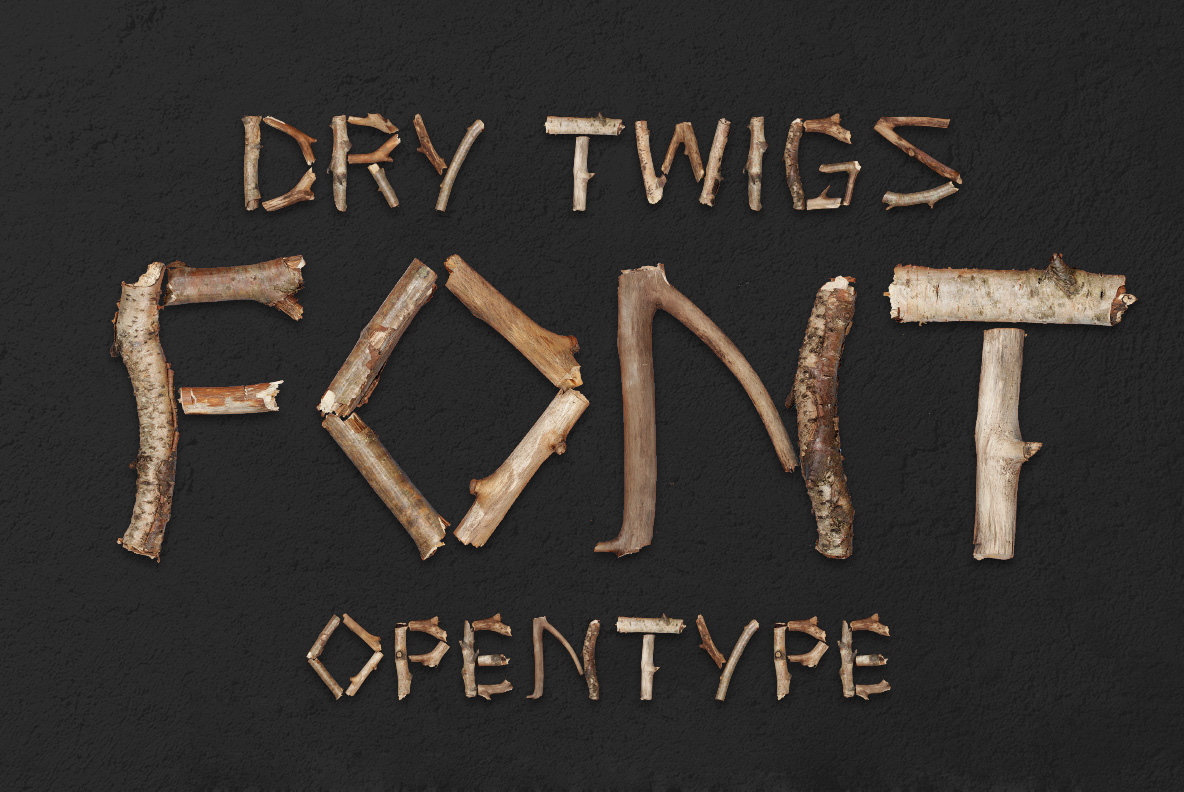
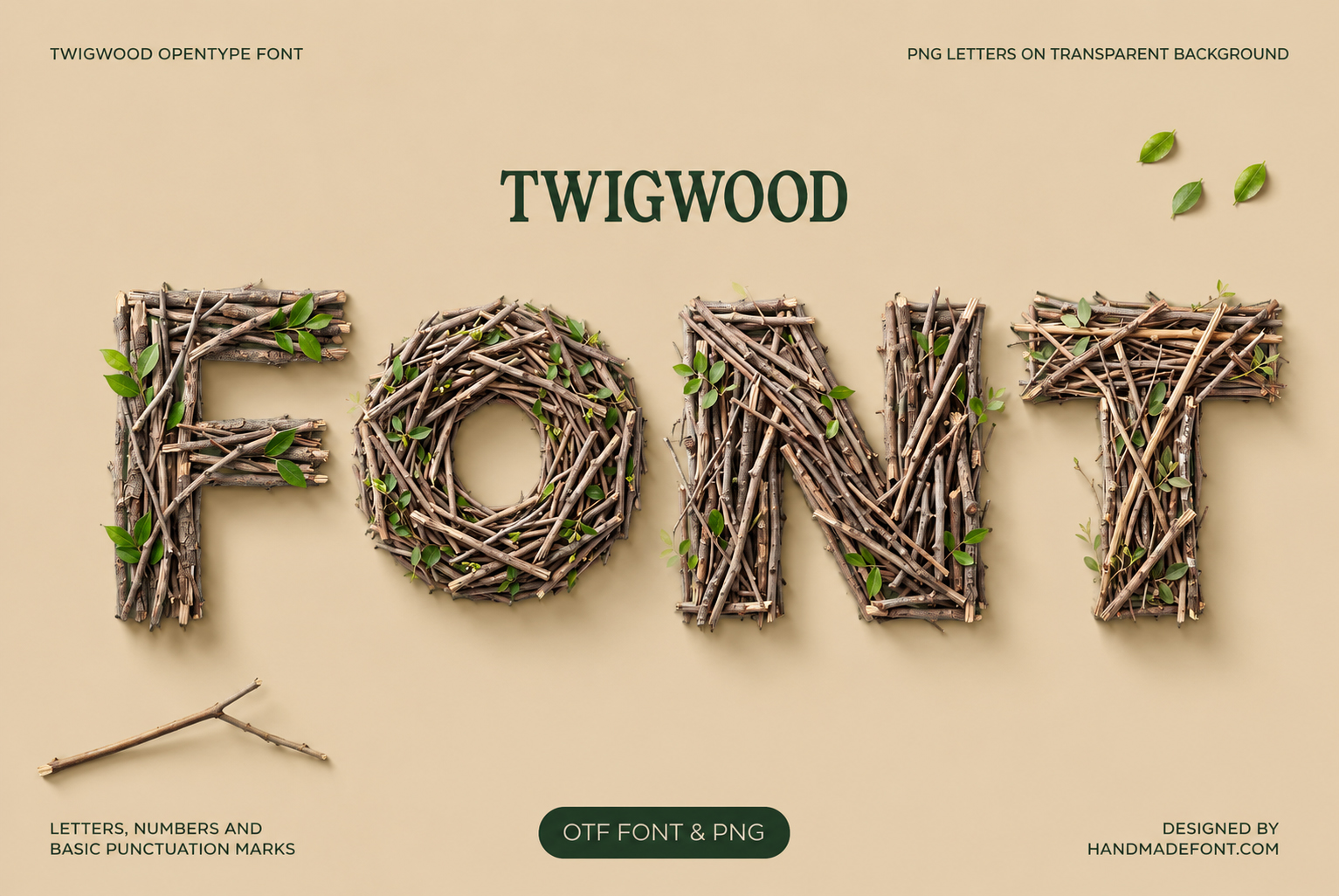
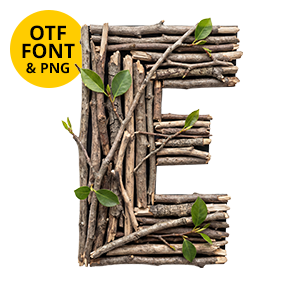
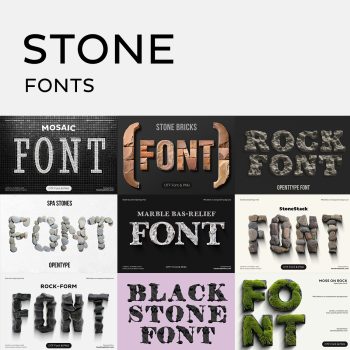
The collection moves through many different natural environments. Moss-covered rocks suggest cool forest floors, while tropical foliage brings dense jungle energy. Grass and daisies recall open gardens and fields; reeds create lighter, more linear forms. Wood, bark and dry twigs introduce warmer rustic textures, whereas stones provide weight and permanence. Water adds movement and transparency, showing that nature-inspired lettering does not need to be green to feel organic.
Organic Typography for Creative Projects
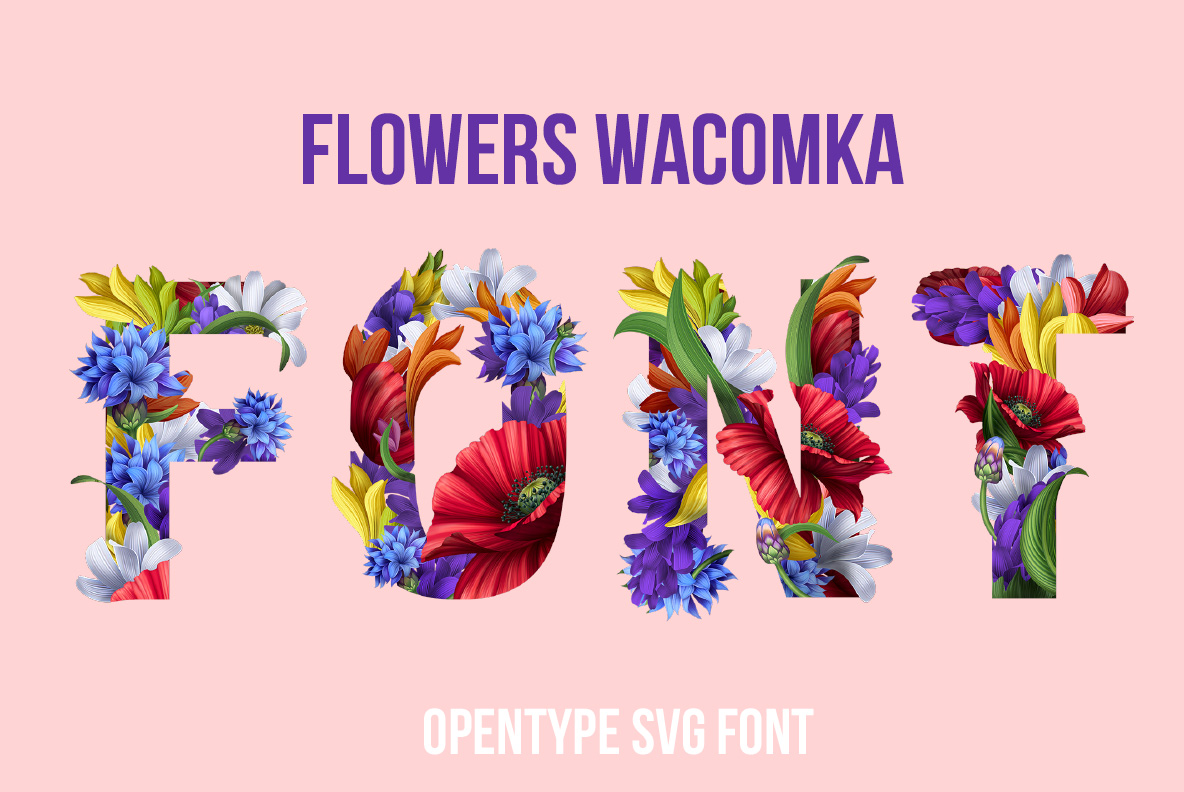
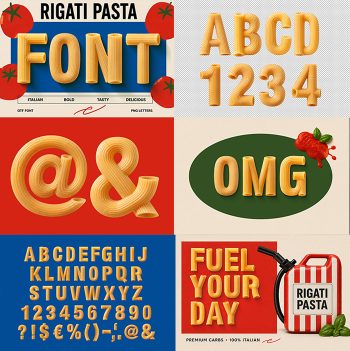
Natural lettering works particularly well when a design needs freshness, texture or a stronger relationship with the environment. Nature Fonts can give eco branding and sustainable packaging an immediate visual language, but their uses extend much further. They can bring personality to posters, editorial layouts, outdoor campaigns, food packaging, wellness identities, travel graphics, event design and large display headlines. Floral and leafy styles can feel light and decorative, while rock and timber alphabets create something heavier and more architectural.
When Letters Grow, Flow and Weather Naturally
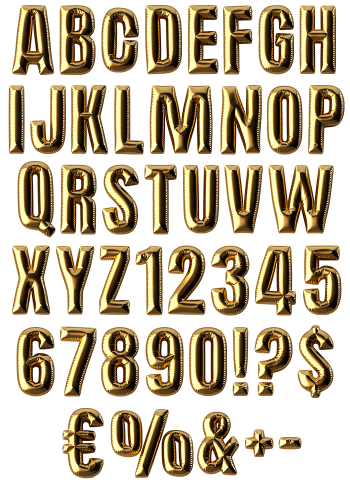
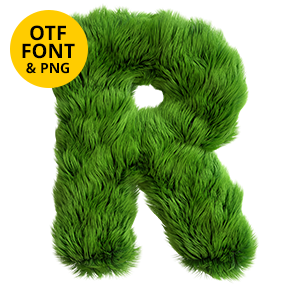
The appeal of object-based nature typography comes from imperfection. Leaves overlap, twigs bend, stone surfaces crack and moss grows wherever it pleases. Those small irregularities prevent the letters from feeling mechanically repeated and give each alphabet a recognizable material personality. Many Handmadefont designs also combine usable font files with separate PNG characters on transparent backgrounds, allowing designers to type normally or arrange individual textured letters as graphic objects within more complex compositions.