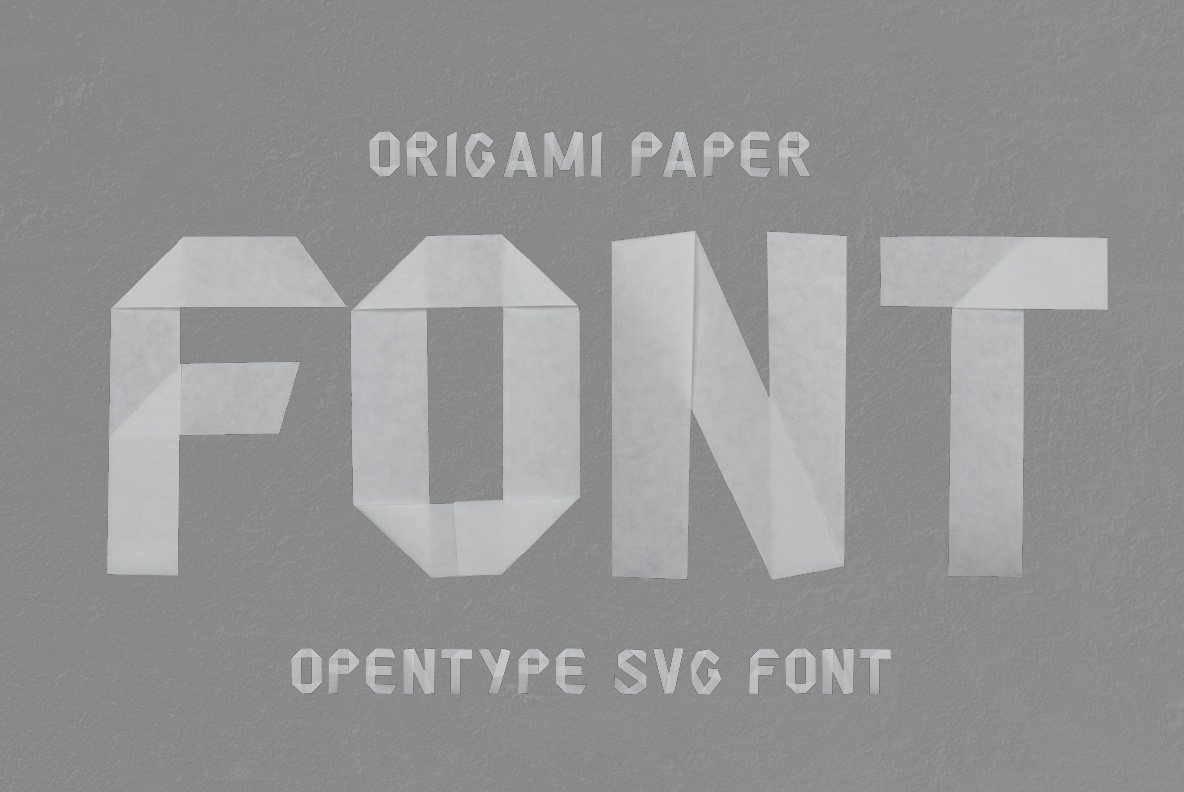
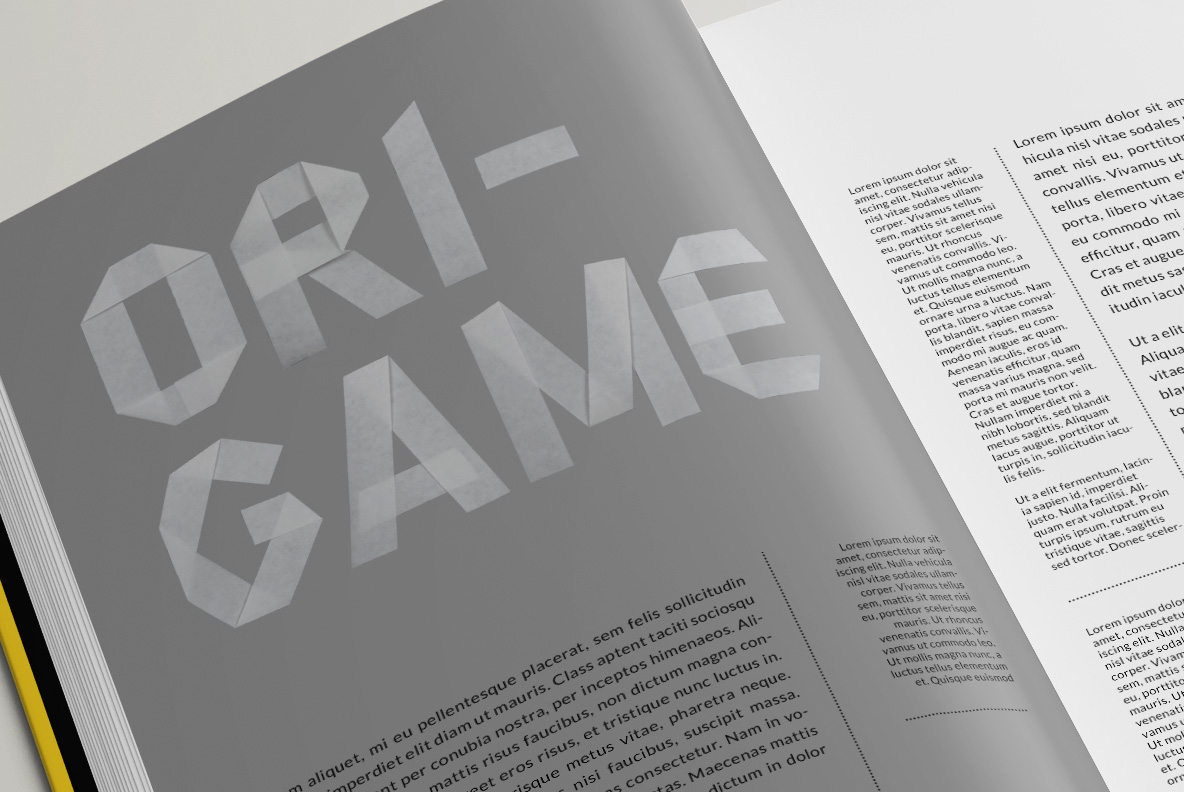
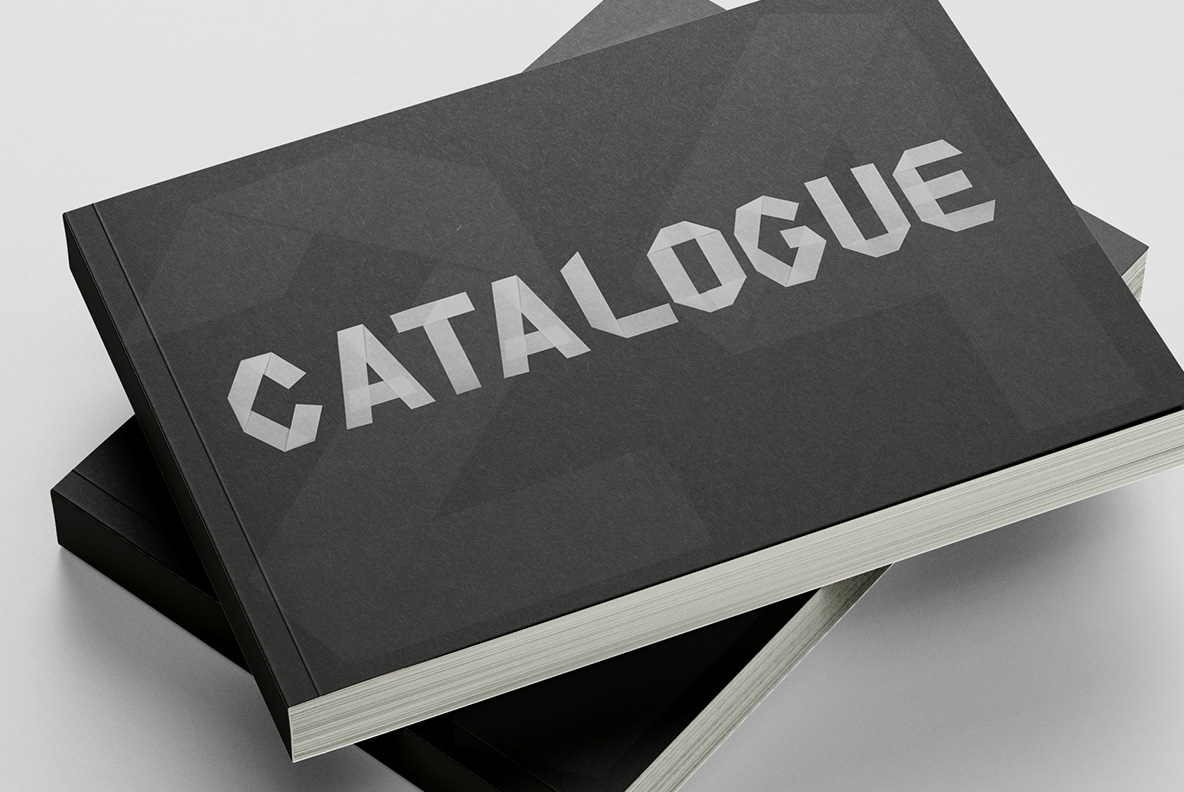
Flat white paper, creased and folded until the strips hold a letter. Each fold catches a slightly different shade of grey, so the letters read as solid objects rather than flat shapes. Nothing is cut or glued; the whole alphabet follows one continuous folding logic. Clean, quiet and geometric, with just enough shadow to keep it off the screen.
One Sheet, Many Creases
Take a strip of white paper, crease it, and keep folding until it stops being a strip. Every letter works that way, namely flat planes meeting at hard angles, each catching a different value of grey. The paper has a visible tooth, so it reads as stock rather than as a drawing. Since the light comes from one side, the folds cast short shadows that tell you which plane sits in front.
The Origami Paper Font Folds Its Own Grid
Specifically, the Origami Paper Font builds a geometric sans out of those planes. Stems are wide ribbons, joints are mitred, and diagonals fold back on themselves wherever a stroke has to change direction. Counters stay generous, which keeps it legible at small sizes. Above all the folding logic runs consistently from A to Z, so a word looks like one object instead of twenty-six. Naturally the greys stay close together.